
Colorado Plateau Counter-Map
An interactive multimedia counter-map telling stories of climate resilience of the Colorado Plateau Native peoples.
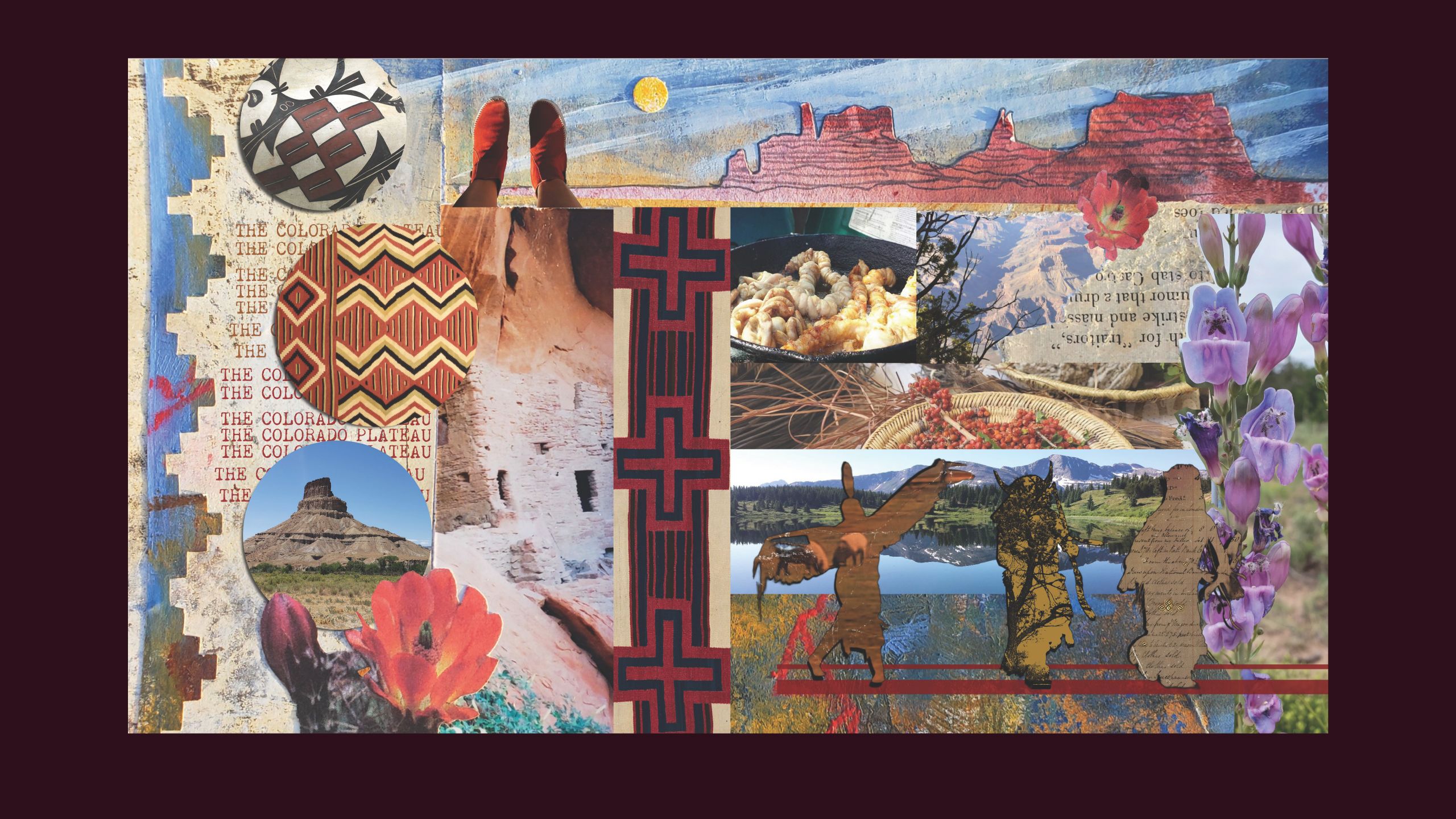

The Colorado Plateau is a majestic expanse of canyons, towering mesas, and high mountains rich with the history and culture of Native and Indigenous peoples who have called it home for millennia. Yet, the stories of our people have often been overlooked or marginalized in conventional maps and narratives. To rectify this, the Colorado Plateau Foundation has embarked on a transformative journey to create counter maps, ensuring that the voices and stories of Native and Indigenous communities are at the forefront and using our sensibilities of color, texture, space, and narrative.
Counter maps are not only about addressing geographic and cartographic limits but about storytelling, identity, and reclaiming space. For centuries, traditional maps have been tools of colonization, often erasing Indigenous presence and knowledge. These maps typically emphasize political boundaries, resources for exploitation, and pathways for settlers, disregarding the rich cultural landscapes and historical significance of the land to its original inhabitants.
The Colorado Plateau Foundation recognizes that to honor the land's legacy truly, it must be seen through the eyes of those who have nurtured it for generations. Counter-mapping allows Native and Indigenous communities to document and share their deep connection to the land, highlighting sacred places, traditional hunting and gathering areas, migration routes, and places of historical and spiritual significance.
Creating counter maps is also a powerful act of resistance and reclamation and a way to assert sovereignty and challenge the narratives imposed by external authorities. They provide a platform to address issues of land rights, environmental protection, and cultural preservation, ensuring that Native and Indigenous perspectives are integral to any discussion about the future of the Colorado Plateau.
The Colorado Plateau Foundation's exploration of counter maps is a bold and necessary step towards decolonizing our understanding of the land. It recognizes that our histories are not relics of the past but vibrant and essential threads in the fabric of the present and future. Through counter-mapping, the Foundation is helping to weave a more inclusive and truthful narrative that honors the wisdom, resilience, and enduring presence of Native and Indigenous peoples on the Colorado Plateau.
In embracing counter maps, the Colorado Plateau Foundation is not just creating new charts but fostering a more profound respect for the land and its original caretakers. It invites all to see the world through a different lens, learn from the stories etched into the earth, and walk forward with greater unity and understanding.


Wake in the morning.
Decide which foot goes in front of the other,
and move.
Featuring counter-mapping is fitting and timely as the world struggles with a pandemic and political soul searching. Now more than ever, the question, what information do we trust and value is profoundly relevant.
The expanding global society, an increasingly transcultural world, and the ascendancy of the information age can give the impression that geographic borders are defunct. Fluid economic geographies, digitally influenced political inclinations, and the arts have activated new interest in intuitive and inquiring maps and portrayals. As a philosophical practice, counter-mapping exalts liberation and artistic freedom, speaks for the revision of traditional mapping to bring about an imaginative and refreshed society, an ethos of truth, and arranges places and events as spirited parts of a cosmological process.
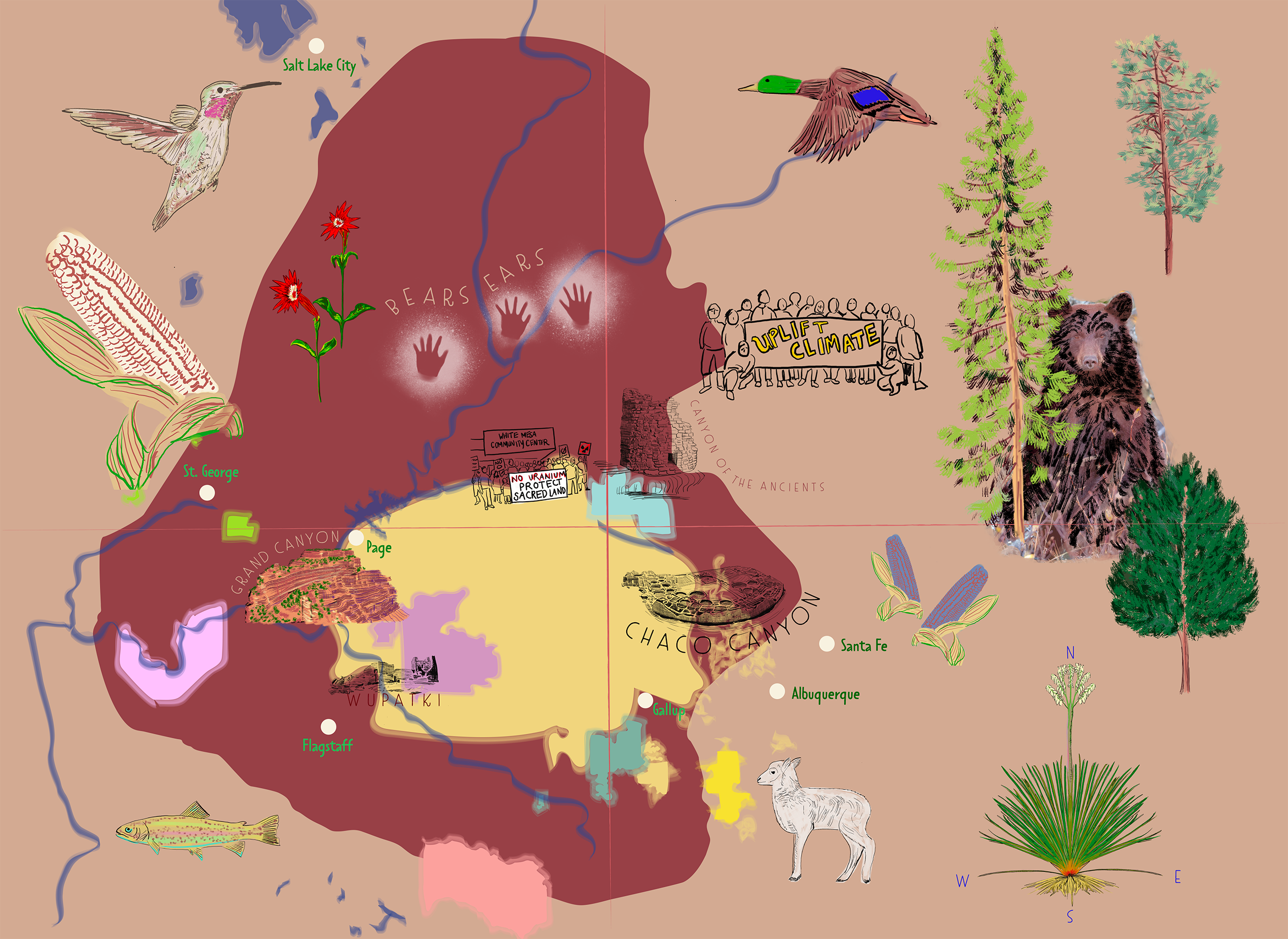
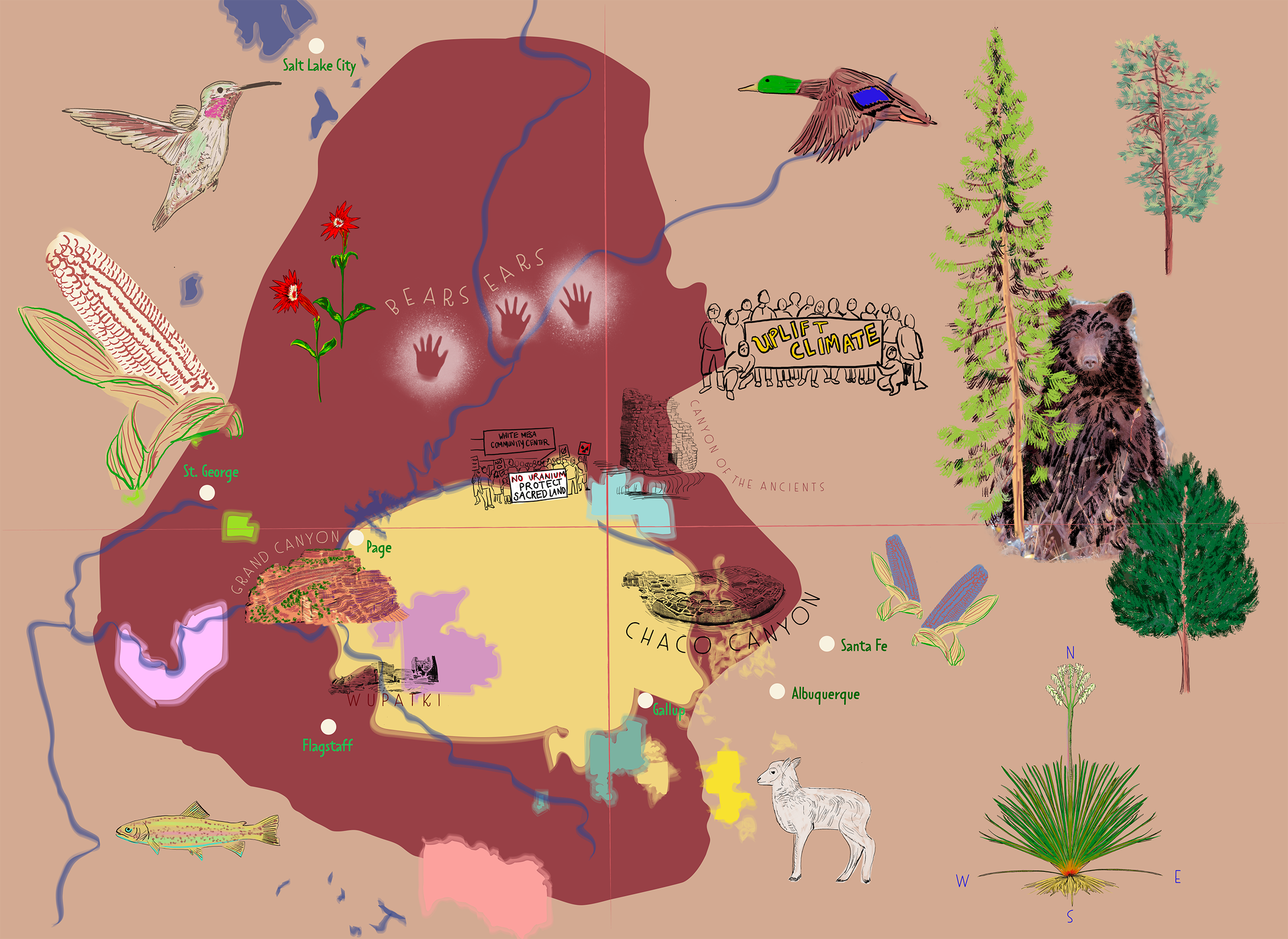
Maps have always been a form of subjectivity, informing this and not necessarily that. Several years ago, I showed my mother a map I made using cartographic software; her response was, "What am I looking at?" I told her it was a map of our village, and specific colors I chose depicted trails and waterways. I told her she needed to imagine looking straight down on a landscape to make sense of the map. And to that, she said, "I'm not a bird." That was quite naturally an epiphany. Yes, my mother is not a bird. She is a human with a distinctive way of looking at the world.
Counter mapping opens the door for agency and influence for different ways of knowing. This exhibition of counter-mapping challenges the colonial histories of maps, opens doors to new expressions of ordering place, encounters multiple knowledge systems, and asserts that it is unnecessary to be a practiced mapping technician to make informative and influential maps.
My stride is my ultimate measure,
as I plant seeds,
nurture and cultivate,
harvest and give thanks,
and then reflect.
I continually remind myself that we live in a world with damaged people and people left behind. We also live in a world with environmental limits. We cannot continue to take from the planet without giving back, and we must not continue to neglect vulnerable people. Now is the time to make counter maps and share different ways of knowing more widely and with compassion and accessibility.
A large part of the globe is trying to look past the pandemic and hoping to return to normal. But most of us know "normal" has not been satisfactory or adequate, especially for marginalized peoples. If nothing, the coronavirus pandemic has taught us how fragile the world is. Paradox has become a too common theme as we seek to care for ourselves and others while others push back against civility and sensibility. Emerging to a more empathetic world cannot be contingent on and controlled by the orthodoxy of outdated mapping standards and attitudes. We can transcend the boundaries of mapping conventions and share our visions of a righteous world with diverse expressions. Stepping into mapping's, what is next, requires conjuring the broadest spectrum of imagination, ideas, and perspectives.
Counter mapping is not only about deflating conventions of mapping and confronting the canon of map-making; it is about creating unprecedented maps that set the record straight and incite and motivate us in an approachable and unexpected way.
Counter maps appear from neglected spaces,
forgotten peoples,
intervals of crisis and rapture,
and in the pattern languages of our lives.
Jim Enote
Living Knowledge: Native Peoples of the Colorado Plateau: This introductory video from the Colorado Plateau Foundation offers background for understanding the counter-map, highlighting how Native communities across the region continue to uphold traditional knowledge and lifeways as vital expressions of climate resilience.
Waters of Resilience
Set against the backdrop of the United States’ only operating uranium mill, "Waters of Resilience" tells the inspiring story of the White Mesa Concerned Community’s fight to protect their groundwater and air from contamination. The film delves into the relationship between the community and the uranium mill, the tireless efforts to combat contamination threats, and the advocacy to preserve the health of their community members.
Harvest of Harmony
"Harvest of Harmony" showcases the resurgence of traditional Native farming practices amidst the modern challenges of climate change and food insecurity. The film focuses on Covenant Pathways and its sustainable agriculture initiatives. We hear James Skeet celebrate the wisdom of Native farming techniques and their contributions to biodiversity, environmental health, and community well-being.
Sacred Ground
"Sacred Ground" follows Flower Hill Institute and the profound connection between Native peoples and their ancestral lands, including resistance against the encroachment of mining operations on sacred places. Through the lens of spiritual leaders and activists, the film illustrates the ongoing struggle to maintain the integrity of sacred spaces, emphasizing the importance of land in Native culture, spirituality, and identity. It is a powerful testament to resilience, unity, and the enduring strength of Native stewardship.
Voices of the Ancestors
This documentary follows the critical efforts of The Hopi School to revitalize and preserve their endangered language. "Voices of the Ancestors" follows the school's language preservation programs, highlighting the innovative methods used to teach new generations their ancestral language. From immersion to arts, the film captures the challenges and triumphs of Hopi and other Native communities, underscoring the essential role of language in maintaining cultural heritage, identity, and the transmission of ancient knowledge.
Climate Reverence
Climate Reverance, a three-minute Colorado Plateau Foundation film, personifies Native and Indigenous traditional knowledge and lived experience in adapting to climate change and sustaining biodiversity.
 Built with Shorthand